Generative AI Visibility Explained: Why Traditional SEO Metrics No Longer Tell the Full Story
Jitender • 9/1/2026

Your organic traffic dashboard says everything is fine. Rankings are stable, keywords are holding, backlinks are growing steadily. And yet somehow buyers keep landing on a competitor because an AI model recommended them instead. This is the gap a lot of marketing teams are running into right now. The metrics that used to tell the whole story are still accurate, they're just no longer complete.
This is where generative ai visibility comes in, and why it needs to sit alongside traditional SEO reporting instead of being treated as an afterthought.
Why Traditional SEO Metrics Were Never Built for This
Rankings, organic traffic, and backlinks were built to measure one specific thing, how well a page matches a search query and earns a click on a results page. That model worked well for a long time because search worked the same way for everyone, type a query, scroll a list of blue links, click through.
AI answers break that model entirely. A buyer can ask ChatGPT or Perplexity a detailed question and get a complete, synthesized answer without ever visiting a website. This is part of why zero click search has become such a significant shift, since a growing share of buyer research now happens without generating any of the traffic your dashboard is built to measure. Your rankings can be strong and your visibility inside these answers can still be weak, because the two are no longer the same thing.
What Generative AI Visibility Actually Measures
Where traditional SEO metrics track clicks and positions on a results page, generative ai visibility tracks something different, whether and how AI models mention, describe, and recommend your brand inside their answers.
This includes whether you're mentioned at all across relevant prompts, whether the model cites your content directly as a source, where you land relative to competitors named in the same answer, and how favorably or accurately the model describes you. None of these show up in a standard analytics dashboard, because none of them involve a click. A brand can be doing exceptionally well by every traditional SEO measure and still be functionally invisible in the exact moment a buyer is asking an AI system for a recommendation.
Why Backlinks Don't Translate Directly Into AI Citations
Backlinks have long been treated as a strong trust signal, and they still matter for traditional rankings. But a backlink pointing to your page doesn't automatically mean an AI model will cite you as a source or describe you accurately. What tends to matter more is whether your brand is understood clearly and consistently across the web as a distinct entity, which is a different kind of signal entirely. A model needs to know confidently who you are before it will recommend you, and that comes down to entity clarity far more than link volume alone.
This doesn't mean backlinks stop mattering. It means they're one input into a much larger picture, rather than the dominant signal they once were for classic search rankings.
The Metrics Worth Tracking Instead
A few numbers matter more here than the ones most reporting dashboards were built around.
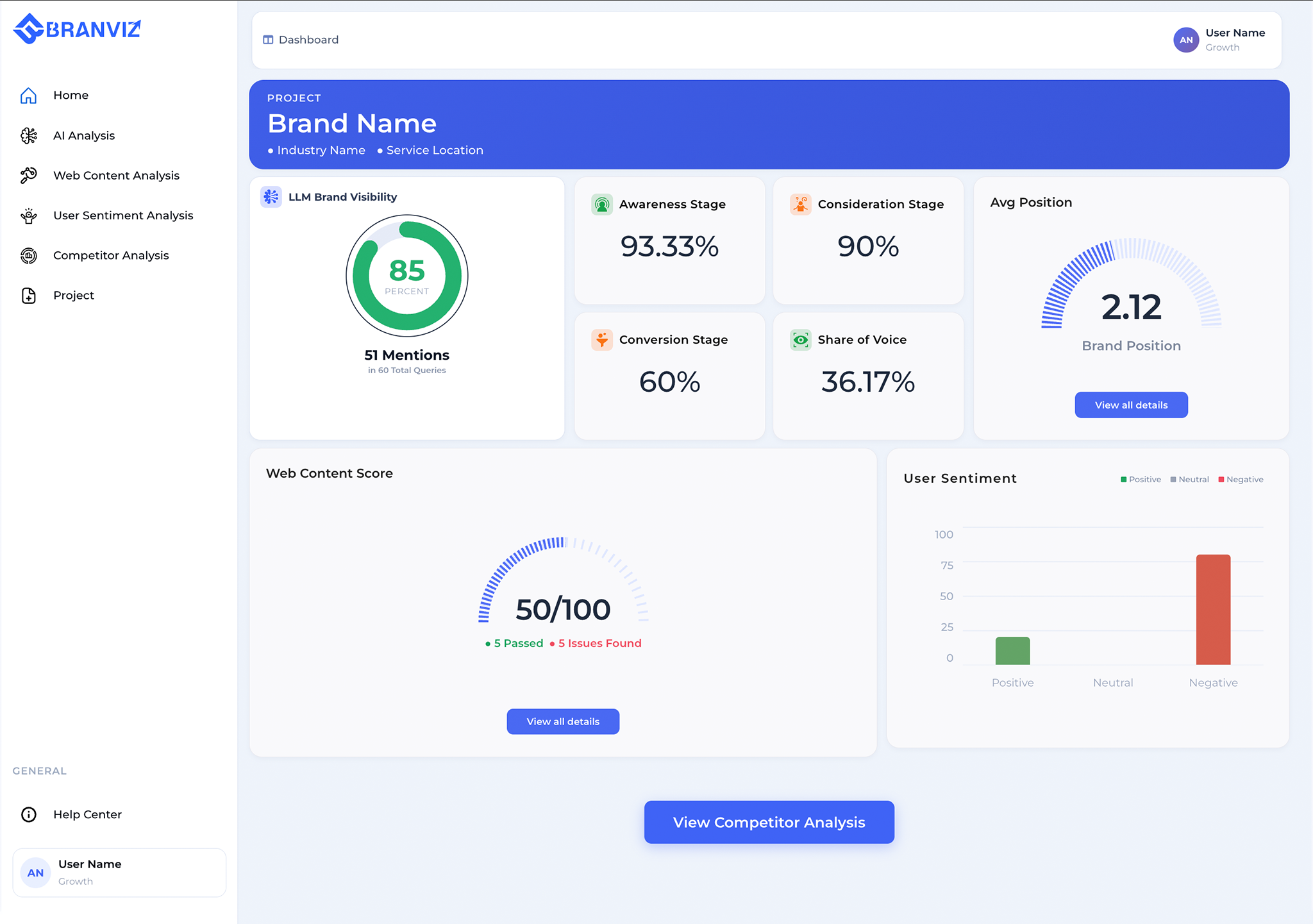
Mention rate across relevant prompts tells you how often your brand shows up when a buyer asks a question in your category. Position and framing tell you whether you're the clear top recommendation or an afterthought buried at the bottom of a list. And your AI share of voice shows you how you stack up against the specific competitors AI models keep naming alongside you, which is a far more direct competitive read than organic rankings alone can give you.
Sentiment is worth watching too. A brand that gets mentioned but described vaguely or unfavorably is in a weaker position than the raw mention count would suggest, and traditional SEO metrics have no equivalent for capturing this at all.
How This Changes What Marketing Teams Should Report On
For a long time, a strong SEO report was enough to reassure leadership that visibility was healthy. That's no longer a complete answer, especially as more buyers shift from typing keywords into Google to asking AI systems direct questions. Reporting that only covers rankings and organic traffic is measuring half a channel and calling it the whole picture.
This is also part of why regular AI visibility audits are becoming a normal part of marketing reporting rather than a one-time novelty check. A single audit is a snapshot. Ongoing tracking is what actually shows whether visibility is improving or quietly slipping as models and competitors both keep shifting.
Common Mistakes Teams Make Here
The most common mistake is assuming strong SEO automatically means strong AI visibility, when the two increasingly diverge. Another is treating a single AI visibility check as sufficient, the same way a one-time SEO audit was never enough on its own. Some teams also only test their own branded prompts instead of the broader, category level questions buyers actually ask, which tends to paint an overly optimistic picture. And it's easy to overlook sentiment entirely, focusing only on whether a brand gets mentioned rather than how it's actually described.
Conclusion
Traditional SEO metrics aren't wrong, they're just incomplete for what's actually happening now. A strong ranking and a strong presence inside AI answers are two different achievements, and treating them as the same thing is how brands end up confused about a growing gap between their reported performance and what buyers are actually seeing.
Branviz was built specifically to close that gap, tracking mention rate, position, sentiment, and share of voice across ChatGPT, Gemini, and Perplexity, so teams aren't relying on old metrics to explain a new kind of visibility. If you want to see how your current SEO performance compares to your actual generative ai visibility, running an audit with Branviz gives you both sides of that picture at once.

FAQs