How to Structure Comparison Pages So AI Models Cite Them
Jitender • 10/9/2026
A comparison page puts your product or service directly next to an alternative and lays out the actual differences. When it's built well, AI models treat it as a reliable source to reference when someone asks how two options stack up. When it doesn't exist at all, or exists but reads as vague marketing copy, the model has to guess, and it often guesses using whatever data it can find, including a competitor's own framing of the comparison.
Comparison page seo for ai is really about removing that guesswork. This post covers how to structure a comparison page so a model has clear, citable facts to work with, rather than relying on inference.
Why AI Models Need Comparison Pages to Exist in the First Place
If a brand never publishes its own comparison against a competitor, that gap doesn't stay empty. A model asked about the two will still generate an answer, pulling from whatever scattered information it can find, which sometimes means leaning more heavily on the competitor's own marketing or outdated third-party reviews. Publishing a clear, direct comparison is one of the few ways a brand can actually shape that narrative instead of leaving it to chance.
This also reduces the kind of error that happens when a model lacks solid data and fills the gap with a plausible but inaccurate answer. A well structured comparison page gives the model a clear, categorized set of facts to draw from, which lowers the odds of it inventing features or misrepresenting either product.
Start With the Answer, Not the Build-Up
Most comparison pages save the actual verdict for the end, after paragraphs of background and setup. That pattern works reasonably well for a human skimming toward a conclusion, but AI models weigh relevance heavily toward the start of a page. Opening with a direct, specific summary of the core difference between the two options gives the model something concrete to work with immediately, rather than making it infer the point from scattered details further down.
A strong opening states plainly who each option is actually better suited for, not just a vague claim about one being superior overall.
Break Content Into Clearly Labeled Sections
Long, unbroken paragraphs are harder for a model to parse accurately than short, clearly headed sections. Structuring a comparison page with specific H2 and H3 headers for each dimension being compared, pricing, features, support, use case fit, gives the model distinct, self-contained chunks of information rather than one continuous narrative it has to untangle on its own.
This also tends to help human readers, who are more likely to jump directly to the section relevant to their decision rather than reading a page start to finish.
Use Tables for the Actual Comparison Data
Tables are one of the clearest ways to present comparison data to a model. A table that lines up specific attributes side by side gives a model structured, categorized facts instead of prose it has to interpret. This matters more for comparison content than almost any other content type, since the entire purpose of the page is showing attribute-by-attribute differences.
Once your underlying data is consistent and well organized, it's worth reinforcing it with proper Schema markup. Product schema paired with FAQ schema on a comparison page helps a model understand exactly what's being compared and distinguish factual specifications from opinion-based review content.
Keep Comparisons Fair and Verifiable
A comparison that reads as one-sided marketing tends to get treated with more skepticism, both by human readers and by models weighing how trustworthy a source is. Linking to the actual sources behind specific claims, and noting when the data was accurate as of a certain date, makes a comparison far more defensible than unsupported statements about being better across the board.
It's also worth being honest where a competitor genuinely wins on a specific use case. Acknowledging that one option fits better for a narrower audience, enterprise scale versus fast self-serve deployment, for example, builds more credibility than claiming an advantage in every category. This kind of factual, specific grounding is really an extension of the broader entity clarity work a brand should already be doing, since a model trusts specific, verifiable claims far more than broad, unsupported ones.
Common Mistakes That Keep Comparison Pages From Being Cited
Burying the actual comparison under paragraphs of brand story before getting to any real differences. Writing in vague superlatives instead of specific, checkable facts. Skipping a comparison table entirely and relying only on prose to describe differences. Leaving out dates or sources for claims that are time sensitive, like pricing or feature availability. Avoiding any mention of where a competitor is genuinely a better fit, which makes the entire page read as biased rather than informative. Publishing the comparison once and never updating it as either product changes.
Does a Comparison Page Guarantee an AI Citation?
A well structured comparison page makes it meaningfully easier for a model to cite you accurately, since it provides clear, specific, structured facts instead of forcing the model to infer or guess. It does not guarantee a citation on its own. Whether a model actually references the page depends on additional factors, including how authoritative the surrounding site is and how the page performs over time. Tracking whether your comparison content is actually getting referenced is the only real way to know if the structure is working rather than assuming it is.
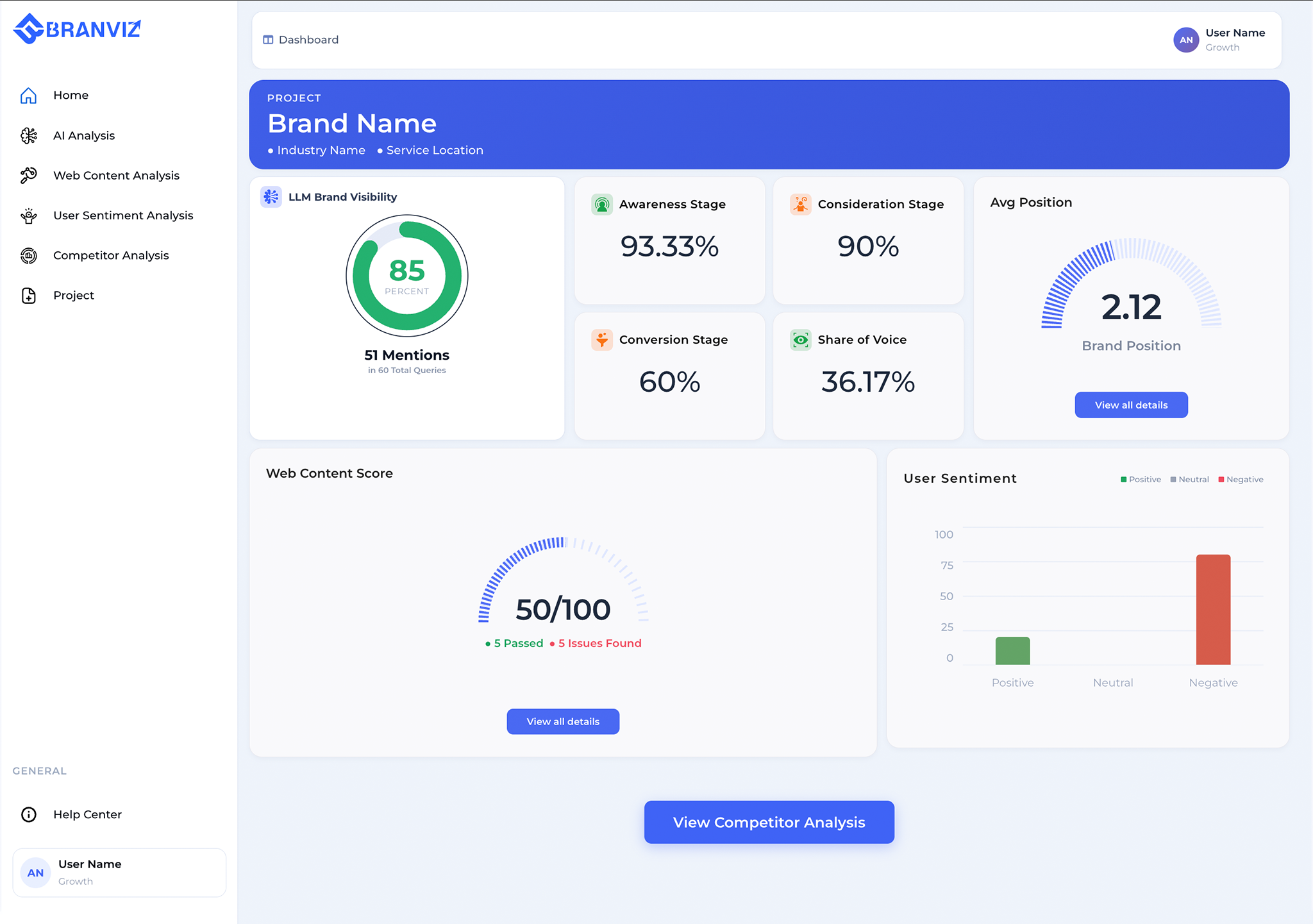
Publishing a comparison page is only one part of the process. You also need to understand whether AI platforms are mentioning your brand, recommending your product, or citing your content when users compare different solutions. Branviz helps you track AI visibility, monitor brand mentions across AI platforms, analyze citations, and benchmark your visibility against competitors. These insights help you evaluate how your brand appears in AI-generated responses and identify opportunities to strengthen your comparison content.

FAQs