What Local Business Owners Should Know About AI Search
Jitender • 10/16/2026
More customers are starting their search for a local business, such as a dentist in Austin, a plumber in London, or a restaurant in Paris, by asking ChatGPT or another AI tool instead of typing into Google and scrolling through a list of results. Local business ai search works differently than the search your business has probably optimized for over the years, and understanding that difference matters, whether you run a dental practice, a law firm, a restaurant, or a home services company.
This isn't about replacing everything you already do. It's about understanding what AI actually looks at when deciding whether to mention your business, so the work you're already doing can count for more.
How AI Actually Finds Local Businesses
When someone asks an AI tool for a recommendation, "best plumber near me" or "a good dentist in my area," the AI isn't pulling up a list of ten websites the way Google does. It's piecing together an answer from whatever it can find about businesses in that area, the website, the Google Business Profile, directory listings, reviews, and anything else publicly visible about you online.
This means how ai finds local businesses depends less on any single factor and more on whether all of those pieces tell the same, consistent story. A business whose name, address, and services are described the same way everywhere tends to come across as more trustworthy to an AI system than one where the details are slightly different depending on where you look.
Why This Matters for Small Business Owners Specifically
Ai search for small business matters because the businesses most affected by this shift are often the ones competing locally against several similar options. If someone asks an AI tool for a recommendation in your category and your business doesn't come up clearly, that's a customer who may never even see your name, let alone visit your website or call your number.
The good news is that much of what helps here isn't complicated or expensive. It overlaps heavily with things a careful local business owner may already be doing, just with a slightly different reason behind doing them well.
What Actually Helps AI Recognize and Recommend Your Business
Keep your business details consistent everywhere. Your business name, address, and phone number should match across your website, Google Business Profile, and online directories. Even small differences, such as an abbreviated street name or an outdated phone number, can make it harder to establish that different listings refer to the same business. These NAP inconsistencies can create confusion about your business's identity and location.
Collect reviews regularly, not just once. A steady flow of genuine, recent reviews helps potential customers understand what to expect from your business. Reviews across relevant platforms can also give AI tools more information about customer experiences, service quality, and reputation. The way online reviews affect AI recommendations depends on more than your average star rating, making the quality and context of customer feedback worth paying attention to..
Describe what you actually do, clearly, on your own website. Vague language about being the best in the business gives an AI system very little to work with. Specific details, the services you offer, the areas you serve, what makes your business different, give it something concrete to reference when answering a relevant question.
Make sure your business profile is fully filled out. An incomplete Google Business Profile, missing hours, no photos, an outdated category, is one of the easiest things to fix and one of the most commonly overlooked.
Common Mistakes Local Business Owners Make Here
Assuming that ranking well on Google automatically means showing up well in AI answers too, when the two don't always move together. Letting an old address or phone number sit on a directory listing for years after a move. Treating reviews as a one-time push right after launch instead of an ongoing habit. Writing website copy that's vague and promotional instead of specific about what the business actually offers and where it operates.
A Simple Way to Check Where You Stand
A fast way to get a sense of where you stand is to ask an AI tool the kind of question a customer might ask, using a query specific to your business category and service area. Check whether your business appears and whether the information provided is accurate. Repeat the same checks periodically to see whether your visibility changes, keeping in mind that AI brand visibility audits are most useful when conducted consistently rather than as a one-time exercise.
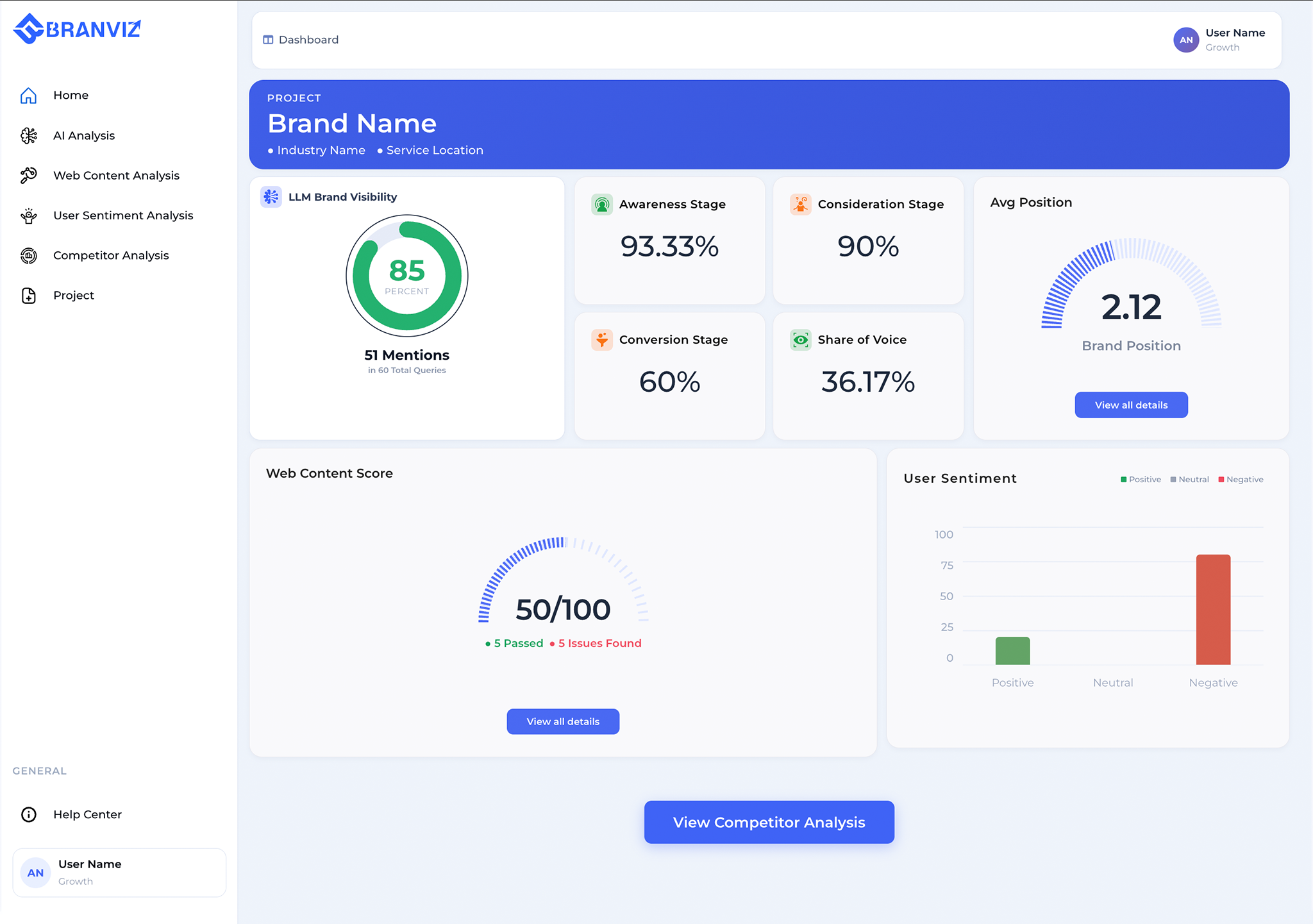
For businesses that want to move beyond occasional manual checks, Branviz offers a way to examine how their brand appears across AI-generated responses. Instead of relying on a few isolated searches, businesses can use AI visibility tracking to understand how often their brand is mentioned and how it compares with competitors. For local businesses, this can provide another perspective on whether their online presence is translating into visibility when potential customers ask AI tools for recommendations.
Does Doing All This Guarantee You'll Be Recommended
Getting your business information consistent, your reviews strong, and your website clear about what you do meaningfully improves your odds of being recommended. It doesn't guarantee it, since AI tools weigh many factors together and competition in your specific category and area plays a role too. What this work does is remove the easy, avoidable reasons a business gets skipped over, leaving the actual quality of your business to be the deciding factor instead.
Conclusion
AI search is changing how customers find local businesses, but the fundamentals that help are approachable for any business owner, not just companies with a dedicated marketing team. Keep your business details consistent everywhere, build a steady stream of genuine reviews, and describe clearly what you actually do. That combination gives AI systems a confident, accurate picture of your business to work from, which is most of what determines whether you get recommended at all.

FAQs